About

pub ads

Saturday, March 24, 2018

Ford recalls 1.4 million cars for loose steering wheels

Ford recalls 1.4 million cars for loose steering wheels


The 2018 Ford Fusion, left, and 2017 Lincoln MKZ are included in the recall.
DETROIT — Ford Motor Co. is recalling nearly 1.4 million Ford Fusion and Lincoln MKZ sedans in North America because loose bolts could allow the steering wheel to come off.
The automaker said it knows of two accidents and one injury linked to the problem, which federal regulators began investigating in October. Ford said the steering wheel bolt can loosen over time, resulting in detachment of the wheel and a loss of steering control.
Ford began looking into the problem nearly three years ago but said at the time that it lacked enough evidence of a defect.
The recall covers Fusions and MKZs from the 2014 through 2018 model years. Most were made in Hermosillo, Mexico, though Fusions built in Flat Rock, Mich., from 2013 through 2016 are included.
Dozens of Fusion owners complained to regulators at NHTSA about loose or wobbly steering wheels over the years, including a Georgia driver who said the wheel of a 2015 Fusion detached in September.
"While driving to Athens, went to turn in gas station and the steering wheel fell off in my lap," the complainant wrote.
Last month, the owner of a 2014 Fusion in Tennessee made this complaint: "While driving on interstate, steering wheel came loose and car veered off interstate. I regained control, but steering wheel is still loose ... as repairs will cost beyond my means at this moment."

BMW pulls out of Detroit auto show

BMW pulls out of Detroit auto show


Bernhard Kuhnt, CEO of BMW of North America, with the all-new X2 crossover at the 2018 North American International Auto Show in Detroit on Jan. 15, 2018. BMW said Friday it is pulling out of the annual Detrouit auto show. Photo credit: BLOOMBERG
DETROIT -- BMW is joining German rival Mercedes-Benz and pulling out of the Detroit auto show.
The decision by another major European brand to pull out of the annual January show comes as the Detroit Auto Dealers Association contemplates moving the show to October starting in 2020, and recasting it as a less-expensive show that is more focused on products and technology. Jaguar, Land Rover, Porsche and Mazda and most major exotic sports car makers and ultraluxury brands also skipped the Detroit show this year.
"BMW Group has decided to withdraw from the North American International Auto Show in Detroit," the company said Friday. "This decision was made as BMW Group is constantly examining our presence at trade-shows and other engagements, while, at the same time, also exploring alternative platforms and formats. The overall goal is to communicate our ideas and plans regarding future mobility in the best way and achieve the greatest possible visibility for our products, technologies and innovations."
The DADA believes it can stem and even reverse the loss of participating automakers in the Detroit auto show by holding the event in the fall, when the weather in Detroit is more hospitable and, most importantly, by reducing operating costs. The DADA wants to recast the show to make it more like the Geneva auto show, where the focus is on vehicles and technology, not just on opulent multistory displays. A vote by the dealer group is expected by mid-April.
BMW's 2018 display was already toned down compared with previous years when the company showed vehicles from its various brands, from motorcycles to Rolls-Royces. This year, there were no motorcycles and no Mini vehicles on display when the show opened to the public.

Thursday, February 15, 2018

But this lovely coupe is not one of them For Cars News

But this lovely coupe is not one of them.

Being the proud owner of a first-generation Kia pro cee’d for close to a decade now, I was really looking forward to seeing a new one designed by the ever so excellent Peter Schreyer. However, it’s not going to happen as the second-gen car wasn’t exactly a hit for the company, prompting Kia to pull the plug by not doing a third one. Even though there are no plans to come out with something along the lines of the gorgeous coupe rendered above, the Ceed (without the apostrophe) family will still grow to include a total of five models.

Get acquainted with the hatchback:

  • 2018 Kia Ceed Goes Official With All-New Styling And More Tech
Revealed yesterday, the regular five-door hatchback and the bread and butter of the sales will be followed shortly by the wagon set to debut in just a couple of weeks at the 2018 Geneva Motor Show. It’s a known fact by now that a sleeker shooting brake is being planned as a road-going equivalent of last year’s superb Proceed concept, pictured below.

Now, Kia has disclosed the identity of the other members of the growing Ceed family scheduled to arrive in the years to come. To the surprise of no one, a crossover is being prepared and engineered in such a way so that it won’t clash with the Sportage by making it smaller. The new compact crossover is programmed to arrive towards the end of the decade to take on the Volkswagen T-Roc.
The identity of the fifth and final model has also been revealed by Kia’s vice president of marketing, Artur Martins. Launching before the crossover, the Ceed GT will be a hotter version of the hatchback and will serve as a follow-up to the outgoing 204-horsepower hot hatch. If you’re thinking it will be a Hyundai i30 N with a Kia badge, it’s not actually going to be the case as Martins revealed the performance-oriented Ceed won’t be as hardcore as the 275-hp i30.
Now, if only Kia would do a GT version of the shooting brake. That would be really interesting to see.

Exclusive: InsideEVs Tesla Model 3 Test Drive Review News

Exclusive: InsideEVs Tesla Model 3 Test Drive Review

2 months ago by Tom Moloughney 223
Tesla Model 3

Tesla Model 3 (Image Credit: Tom Moloughney/InsideEVs)

InsideEVs’ Tom Moloughney gives us an up-close first impression of the Tesla Model 3

It appears that Tesla is finally beginning to ramp up production of the elusive Model 3. In the first five months of availability, they have only delivered a little over 700 units, mostly all to Tesla employees. However, non-employees are now finally taking delivery of a car that they left a $1,000 deposit on, sight unseen, nearly 20 months ago.

Tesla Model 3

Tesla Model 3 charging port (Image Credit: Tom Moloughney/InsideEVs)
Because of this, Model 3s are finally becoming available for test drives and road test reviews. I was lucky enough to have a friend, who just picked up his Model 3 last week, let me take his car for an extended test drive.
First, I’d like to comment on the build quality, as there’s been a lot of chatter in the online forums and groups about misaligned exterior body panels. I have to say the car wasn’t perfect.
Some of the exterior panels weren’t as perfectly aligned as I’d like them to be. However, while there were some slight imperfections, overall it was more than acceptable in my opinion.
I probably wouldn’t have even brought it up if this wasn’t a topic that’s been so widely discussed. I did have to slam the driver’s door a little harder than I would like to in order for it to fully close though. I learned that because the first few times I tried to close it, the door remained partially ajar.
The Deep Blue Metallic looked so good in person that I’m now seriously considering it for my Model 3. The trunk space is larger than I imagined it would be, and with the rear seats folding nearly flat there’s enough room to haul quite a bit of cargo. The trunk also has a lower compartment to store items like a portable EVSE, tools, etc., and is accessed by lifting the removable floor panel.
The frunk didn’t appear as large as the Model S frunk, but it still provides a good amount of added cargo space. The rear seats are very comfortable, and there’s a lot of headroom in the rear seating area, no doubt aided by the fact that there’s no metal roof with a headliner, just a huge panel of glass above your head.

Tesla Model 3

The trunk offers ample cargo room. (Image Credit: Tom Moloughney/InsideEVs)

Tesla Model 3

The frunk isn’t as large as the one in the Model S, but it still adds a good amount of additional cargo space. (Image Credit: Tom Moloughney/InsideEVs)
The front seats were also very comfortable and supportive. I’d say they are better than the original Model S seats, but not quite as good as the Next Generation seats that come standard in the S now. I have to admit, I was a little underwhelmed with how the large center screen controls everything. Yes, I had read that was the case, so I knew it did going in. However, it’s different when you’re in the car and forced to use the touchscreen to perform simple tasks like opening the glove box or turning on

the windshield wipers.

Tesla Model 3

The left side stalk can be used to activate a single-swipe of the wipers, as well as the washer. (Image Credit: Tom Moloughney/InsideEVs)
I’m all for simplicity, but Tesla may have taken it a little too far. My first impression is that I won’t love everything being controlled by the center screen. Needing to look to my right for every bit of information, as well as to activate accessories while driving, just doesn’t seem all that safe.
Perhaps I’ll get used to it when I get my Model 3, but in my first impression, at the very least I’d prefer to have full windshield wiper activation available on the steering column and a small driver’s display or HUD for vital driving information. As it is, you can activate the wipers for a single-swipe to quickly clean the windshield with the left side stalk, but you need to go to the center display if you want them to remain on.
One thing that Tesla did do right with the wipers is that when you activate the single-swipe or washers, the wiper icon appears on the center screen to make it easier for you to activate them. Still, you need to look to your right to find the icon to tap, and this is while your visibility may already have been impaired by inclement weather.
There’s a stalk already on the column that activates the washer and wiper, why not allow that to have full control of the wiper function? Change, simply for the sake of change, isn’t the always the best decision.
Another complaint I have is that the view out of the rear window of the car really is not that good. I realized this when I couldn’t tell if there was a car behind me or not when stopped at a traffic light at night. The rear deck of the car is so high, you cannot see the headlights of cars standing behind you unless they leave a lot or room between the vehicles.
My friend whose car this is commented on this also, and said he’s turned on the rear-view camera a couple times already just to see if someone was behind him. I will say that he does have the rear window tinted, so that could contribute to reduced rear visibility, but it’s not a very dark tint. The fact is, the rear viewing area is short and narrow. The tint isn’t the real culprit; it’s the small area of glass that ends too high up on the rear deck to allow a good outward view.

Tesla Model 3

The rear window doesn’t continue down as far on the Tesla Model 3 as it does on most cars. This limits the driver’s rear view visibility. (Image Credit: Tom Moloughney/InsideEVs)

Tesla Model 3
You can see how high the rear deck continues up the rear of the Tesla Model 3. The glass doesn’t begin until about halfway up. (Image Credit: Tom Moloughney/InsideEVs)
On the road, the Model 3 doesn’t disappoint. It actually felt faster than Tesla’s claim of 5.1 seconds from 0-60, supporting Motor Trend’s recent instrument test which delivered a time of 4.8 seconds. I wonder if under-estimating the Model 3’s quickness is part of Tesla’s Model 3 anti-sell campaign?

Tesla Model 3

The split rear seats fold nearly flat and allow more cargo and longer items to fit. (Image Credit: Tom Moloughney/InsideEVs)
The handling was also impressive. While I couldn’t really push the car too much, being it’s a friend’s car who was kind enough to loan it to me for a test drive and combined with the fact that I was on public roads, I was still able to enjoy some spirited driving to test out the car’s maneuverability.
The steering ratio is quick, and there’s practically zero body roll. I’d really love to get a Model 3 on a track. The turning radius isn’t as short as I’d expect for a car of this size, but it’s also not so wide that it’s a problem either.
The regenerative braking has two settings: Standard and Low. In Standard Mode the regenerative braking is most aggressive. However, even in Standard Mode, the regenerative braking wasn’t as aggressive as a BMW i3, or a Chevy Bolt.
I like my regen like my coffee – the stronger the better, and in this regard, the Model 3 comes up a little short as compared to some competitors. I’d prefer if they added one more setting that was stronger than Standard Mode, and let the customer decide which they prefer.
Personally, I think Chevrolet has the best regen system available today, allowing the driver to select various levels of strength as well as offering steering wheel paddles to instantly apply the full force of the regen system. I could drive a Bolt all day and never touch the friction brakes.

Tesla Model 3

Inside the Tesla Model 3 (Image Credit: Tom Moloughney/InsideEVs)
The adaptive cruise control worked well. To activate it, you press the right steering column stalk down once. To activate Autopilot, you press the same stalk quickly down twice. Another nitpick I have about the need to interact with the center screen, is that you need to do so in order to increase or lower your speed when using the ACC.
Once you set the speed, if you want to change it, you need to do that from the center screen, unless you deactivate the ACC, negotiate to your desired speed and re-activate the ACC. I’d prefer if I could increase or lower the set speed by lifting or lowering the stalk that activates it, instead of needing to tap the center screen. The Autopilot worked nicely but tended to bounce a little back and forth within the lane. It stayed within the lane but wasn’t really as steady as I’d like it to be.

Tesla Model 3

Inside the Tesla Model 3 (Image Credit: Tom Moloughney/InsideEVs)
The two knobs on the steering wheel are used to adjust the side view mirrors and the steering column position. I couldn’t find any other use for them, but perhaps they do have another function that I couldn’t figure out in the limited time I had. Speaking of the side view mirrors, they are auto-dimming to reduce glare and can auto tilt for reversing, and auto fold when you park. Both of these features can be activated or disabled in the center screen control option.


The steering wheel has two “wheel” buttons that are used to adjust the side mirrors and the steering column position. (Image Credit: Tom Moloughney/InsideEVs)
The rearview camera has a strange fisheye effect, something that I’m really not used to seeing in a rearview camera. It distorts the field of view a little more than I am comfortable with. Perhaps it does this so the camera can show a wider field of view, but personally, I’d prefer it didn’t have this effect. It’s admittedly a nitpick, but it’s worth pointing out because I haven’t seen another rearview camera with this kind of view. Perhaps it’s something that will be corrected at some point in the future.

Here Are The 8 Cheapest Electric Vehicles On Sale In The U.S. Today News

Here Are The 8 Cheapest Electric Vehicles On Sale In The U.S. Today

13 hours ago by Steven Loveday 30

The 2018 Nissan LEAF is one of the cheapest BEVs on the market and an InsideEVs’ top pick.

If price is the ONLY consideration, how do the current battery-electric vehicles (BEVs) available in the U.S. stack up?

It’s important to point out that you’ll be hard-pressed to find many other publications putting out lists like these for electric vehicles. There are very obvious reasons for that, but it warrants some explanation for those that are unaware. It can be time-consuming and frustrating to track down detailed pricing information, model year changes, specific state-related availability, etc. for plug-in cars.
For this reason, InsideEVs has decided that it’s going to make a newfound effort to provide our readers with the most up-to-date information in the form of LISTS for your education and convenience. Remember, we constantly update our COMPARE EVs tab at the top of the home page, so all of this information is at your disposal indefinitely.

Read Also: Top 6 Plug-In Hybrids Ranked By Electric Range

We need to spend some time pointing out a number of disclaimers. Otherwise, we’re looking at hundreds of potentially negative comments saying, “Wait this car is only available in Cali,” or “You can’t even get this car, there’s no stock,” or “This is a compliance car,” or “This car isn’t even priced, it’s only available as a lease,” etc.
So, without further ado, here’s our list of the cheapest BEVs, with plenty of disclaimers, so as not to upset the Feng Shui of our environment, amidst our concerted attempt to assist EV advocates in their future pursuits.
Keep in mind that all of these vehicles qualify for the $7,500 U.S. federal EV tax credit (see after-credit pricing here). However, you MUST have the tax liability in order to qualify for it (if you don’t owe the feds more than $7,500, you’re likely out of luck, and if you choose to lease, it’s up to the manufacturer and/or dealership to determine how much, if any, rebate will be applied to your deal).

Chevrolet Bolt

8) Chevrolet Bolt – $36,620

The Bolt EV is the most expensive car on this list, however, it’s available in all U.S. states, and decent inventory assumes anyone in the U.S. should be able to get one immediately. Depending on your location, you may be able to secure a pretty good deal. Let’s not forget that as far as affordable BEVs go, you can’t top the Bolt EV’s 238-mile range.


7) Fiat 500e – $32,995

Many call the Fiat 500e a compliance car, and that comes as no surprise since it’s only available in a few CARB states, added to that fact that CEO Sergio Marchionne has asked that you please don’t buy this car, or it will cause his company to lose money. With all of that aside, it’s a blast to drive and relatively inexpensive. It gets an EPA-rated 84 miles of range.


6) Kia Soul EV – $32,250

The Kia Soul has claimed a plethora of awards due to its immense amount of space and versatility. It’s basically a compact car that should be classified as an SUV/CUV. There are no other vehicles in its class that offer such expansive passenger and cargo volume, not to mention an industry-leading warranty and a low price tag. So, the BEV variant seems like a no-brainer, right?
Honestly, if we could buy one tomorrow with no hassle (in Michigan or Florida), it’s likely that we’d partake, especially when an updated model with more range arrives. But ugh, again, it’s not an option outside of California. However, we’ve been apprised that with a little bit of effort, you may be able to get one delivered to a dealership in your area, and there is some stock in other CARB states and even outside of such states, but it’s limited and rare. The latest iteration of the Soul EV returns 111 miles of real-world range.

Cheapest BEVs

5) Volkswagen e-Golf – $30,495

The Volkswagen e-Golf made a name for itself in our 2017 scorecard recaps as that “jacka**” of the year, via Jay Cole! But, we all agree wholeheartedly. VW is one of the most impressive and best-selling brands across the globe. However, there’s nothing positive about offering a fun-to-drive, super-popular, tried-and-true VW Golf in the EV variety, and then failing to stock it or update it. Nonetheless, if you can secure one, it’s a great hot hatch at a reasonable price. But, even with the now-bigger battery, you’ll only get 125 miles of range.

cheapest BEVs

4) Nissan LEAF – $29,990

The all-new 2018 Nissan LEAF is really a no-brainer, and truly our top pick in terms of range, performance, passenger and cargo capacity, and price. Yes, it falls in the middle of this list, but that’s not a true representation of the LEAF’s quality and success. The current base LEAF will get you 151 miles of EPA range. And it is, and always has been, available nationwide.
Many of our readers and visitors continue to dog on the LEAF’s lack of a thermal management system for the battery pack. That fact that it superficially degrades the battery pack is old news and not so much a reality today. We have in-house experience over years and years of use that proves otherwise.
However, it continues to plague the LEAF, but Nissan has assured us that their new battery tech accounts for this and it’s really not at all what many of us have seen/listened to/observed over the years. Lesson learned (whether or not you choose to accept it): The LEAF’s lack thereof shouldn’t be a major factor in your buying decision. This is honestly no different from the multitude of comments about the Tesla Model 3’s fit and finish issues. While there may be isolated instances, it’s just not validated on a grand level.

Cheapest BEVs

3) Hyundai IONIQ Electric – $29,500

The Hyundai IONIQ Electric commands 124 miles of EPA-estimated electric range. It looks like a “normal” car, offers decent room for four adults, and plenty of space for cargo. Sadly, Hyundai can’t keep up with demand, so inventory is generally quite low. It’s also only available in California.

Cheapest BEVs

2) Ford Focus Electric – $29,120

The Ford Focus Electric will carry you 115 miles on a charge. It’s nearly a carbon copy of its ICE stablemate, seating five with a cramped rear seat, and offering respectable cargo capacity if you opt for the hatchback. However, the Focus Electric hatch has almost 10 less cubic feet behind the rear seats than the ICE Focus, making the utility of the hatchback variant almost non-existent compared to a compact car with a trunk (it’s basically the same amount of space as the ICE Focus’ small trunk). Once again, this is a limited-production vehicle that’s only available at dealerships in CARB states, however, you can order it nationwide and it can be serviced at most Ford dealerships.

Cheapest BEVs

1) smart fortwo ED – $23,800

C’mon, it’s way cheap, especially when you knock off the $7,500 rebate …
It’s really not all that cheap for what you’re getting. A two-seat city car with 58 miles of range and a top speed of 81 mph! You’d think Mercedes-Benz could do better. This thing should have more miles than most cars on our list. However, it is MB, and the German automaker has not proven it has a knack for popular, long-range EVs. Regardless of how we feel about it, there’s definitely a place for such vehicles, and based on the criteria (cheapest BEVs), it comes out ahead of the rest and it’s available nationwide, though stock is always low.

Cheapest BEVs

*Honorable Mention: 2017 Honda Clarity Electric – *as low as $199 per month (California and Oregon/lease only)

This is a fantastic car. The fact that’s it’s a Honda speaks volumes, unless, of course, you only buy American, which is increasingly challenging in this day and age. Not only did the Clarity PHEV arrive and smack down the Toyota Prius Prime in all-electric range (47! vs. 25), the only plug-in to date to even tread close to the Chevy Volt), the 89-mile BEV variant undercuts most all range rivals when price is the primary factor. At $199 per month with only about $800 down, it’s hard to beat. However, again, this is essentially a city car. 89 miles of range won’t be your friend if you have a long commute or plan on road-tripping.

Closing

Herein lies the rub with these type of LIST posts …
Being that you can’t get some cars nationwide, and some vehicles don’t offer a reasonable range per price point, you may rank these cars differently. But, the point is, these are the cheapest BEVs on the U.S. market today, regardless of any other factors. Your job is to situate your priorities, location, tax situation, range needs, and overall brand commitment, and use this list as a reference to make the best decision going forward.
After considerable research, in terms of nationwide availability and the best bang/range for your buck, InsideEVs picks the 2018 Nissan LEAF and Chevrolet Bolt. However, neither car tops our list of today’s cheapest BEVs.

Porsche And Audi Talk About PPE Partnership To Develop New EVs

The Premium Platform Electric architecture will seek to make better EVs while getting them to market quicker.

Those who make a living working in hazardous environments will recognize PPE as the acronym for Personal Protective Equipment. SEO and digital advertising gurus might give this a quick glance and mistake it for some kind of new pay-per-click arrangement. In this instance, however, PPE stands for Premium Platform Electric – a new all-electric vehicle architecture that Audi and Porsche will develop together.
Being under the same Volkswagen umbrella, such a partnership between the manufacturers isn’t exactly revolutionary, but it will have benefits. Porsche Executive Board Chairman Oliver Blume said going solo on such an undertaking would have cost the company “around 30 percent higher.” His counterpart at Audi, Rupert Stadler, called the joint effort “unprecedented in the automotive industry” and said it was a key part of Audi’s future.

Porsche electric news:

Obviously there’s some pomp and circumstance going on here, but whether people are ready for it or not, the automotive future is an electric one. That may not be an easy transition to make when you realize that over a century of internal combustion engineering and design is baked into the current manufacturing mindset. Getting the most from electric vehicles – whether they use batteries or hydrogen fuel cells – likely means completely rethinking the entire process.

That seems to be a primary goal with the Porsche/Audi PPE project. Whereas current electric offerings from automakers generally involve dropping batteries motors into cars originally designed for internal combustion engines, PPE will consider everything from wheelbase to packaging and spaciousness to find all advantages of a purely electric vehicle. Furthermore, the project will seek to make the platform scalable to a range of models, including low-floor cars and high-floor SUVs. Once developed, the architecture would allow both automakers to bring new EVs to market much quicker.

Audi electric news:

  • Audi Plotting Fully Electric Version Of Long-Wheelbase Q2
  • Audi E-Tron GT Rumored For 2022 Launch
The work on this new platform will take place in both Ingolstadt – home to Audi’s largest production facility, and in Weissach – the location for Porsche’s development center. The first all-new models using the PPE architecture are expected to arrive in late 2021. In the near-term, Audi’s E-Tron and the Porsche Mission E will launch as the first purely electric models from both brands.
Source: Audi
Keep the conversation going in our InsideEVs Forum covering electric cars and green technology. Start a new thread about this article and make your point.

Porsche Mission E: Everything We Know

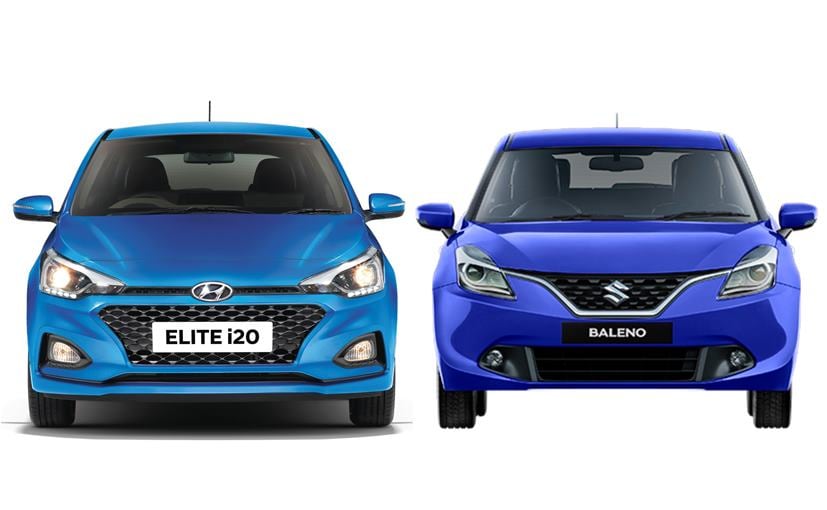
2018 Hyundai i20 Facelift vs Maruti Suzuki Baleno: Spec Comparison News

2018 Hyundai i20 Facelift vs Maruti Suzuki Baleno: Spec Comparison

The Hyundai i20 facelift has been one of the key rival to the Maruti Suzuki Baleno, but with the recent update, it received at the Auto Expo 2018, has the car become better offering? We put down everything on paper find out just that.

Highlights

  • Hyundai has launched the i20 facelift at the 2018 Auto Expo
  • The i20 facelift gets better safety features compared to the Baleno
  • The Baleno gets an AT option the i20 facelift doesn't
Hyundai recently launched the i20 facelift in India at the Auto Expo 2018. Updated with better styling and improved features, the 2018 Hyundai i20 facelift has been priced at ₹ 5.34 lakh for the base petrol variant, going up to ₹ 9.15 lakh for the top-of-the-line diesel trim. While the updates aren't exceptionally big, but the 2018 i20 is now better equipped to face the segment leader, the Maruti Suzuki Baleno, which despite not receiving any update since its launch, has been doing some strong numbers. So, is the 2018 Hyundai i20 now better than the Maruti Suzuki Baleno? Well, we put down everything on paper find out just that.